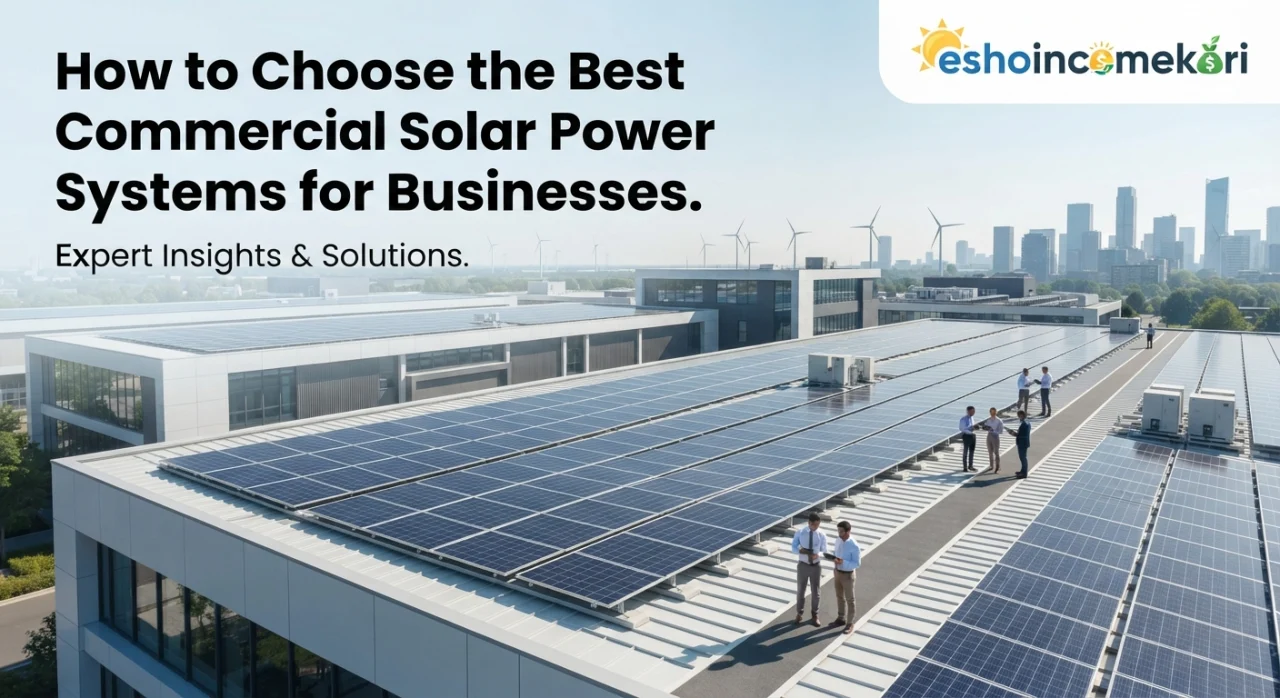
How to Choose the Best Commercial Solar Power Systems for Businesses
Choose the best commercial solar power systems for your business. Compare costs, savings, and ROI for solar panel installations.
THE “DISCOVER HOOK” INTRO
Commercial solar power is a significant investment that can generate substantial returns for businesses. With the installation of solar panels, businesses can produce their own renewable energy, lower their energy costs, and contribute to a more sustainable future.
The key to a successful commercial solar installation lies in choosing the right system for your specific business needs. Factors such as business size, energy consumption, roof space, and budget all play a critical role in determining the ideal solar solution.
QUICK SUMMARY / KEY TAKEAWAYS
-
Commercial solar systems generate renewable energy for businesses, reducing reliance on the grid.
-
Costs range from approximately $10,000 to $300,000 depending on system size, business type, and energy consumption.
-
Components include solar panels, inverter, mounting system, and optional battery storage.
-
Returns are generated through reduced energy costs, feed-in tariffs, and available tax incentives.
TABLE OF CONTENTS
-
What is Commercial Solar?
-
Key Components of a Commercial Solar System
-
Factors to Consider When Choosing a Commercial Solar System
-
Costs and Return on Investment
-
How to Choose a Commercial Solar Installer
-
Frequently Asked Questions (Google FAQ Schema)
-
Verdict & Actionable Conclusion
MAIN CONTENT SECTIONS
What is Commercial Solar?
Commercial solar power systems are designed to generate electricity for businesses. Solar panels (also known as photovoltaic or PV panels) convert sunlight into electricity. This electricity can be used to power a business’s operations, reducing reliance on the grid and lowering electricity bills.
Key Components of a Commercial Solar System
| Component | Description |
|---|---|
| Solar Panels (PV Panels) | Convert sunlight into electricity. Efficiency, durability, and warranty vary by manufacturer. |
| Inverter | Converts the direct current (DC) electricity produced by panels into alternating current (AC) electricity used by businesses. |
| Mounting System | Secures panels to the roof or ground. |
| Battery Storage (Optional) | Stores excess electricity for use when the sun isn’t shining, improving self-sufficiency. |
| Monitoring System | Tracks system performance and energy production. |
Factors to Consider When Choosing a Commercial Solar System
Business Size and Energy Consumption
The size of the system should match your business’s energy needs. Larger businesses with high energy consumption (e.g., manufacturing, retail) require larger systems. Analyse your electricity bills to determine average consumption and peak demand.
Roof Space and Orientation
The amount and orientation of available roof space will determine the number of panels that can be installed. Ideal for solar is a north-facing roof with minimal shading. If roof space is limited, ground-mounted systems may be an option.
Budget
Commercial solar systems range in cost depending on the size and quality of components. Government incentives and tax benefits can significantly reduce the upfront cost.
System Quality and Warranties
Choose high-quality panels and inverters with strong warranties. Panels typically come with a 25-year performance warranty and inverters with 5-10 year warranties. Research manufacturers and look for products with proven reliability.
Costs and Return on Investment
| Factor | Description |
|---|---|
| System Cost | Includes panels, inverter, mounting, installation, and permit fees. |
| Government Incentives | Government incentives can reduce upfront costs. |
| Energy Savings | Reduce reliance on grid electricity, lowering monthly bills. |
| Feed-in Tariffs | Sell excess electricity back to the grid. |
| Tax Benefits | Depreciation and other tax deductions may apply. |
How to Choose a Commercial Solar Installer
-
Look for Experience: Choose an installer with experience in commercial solar installations, ideally with a track record of projects similar to your business type.
-
Check Credentials: Ensure the installer is accredited and licensed (Clean Energy Council (CEC) accreditation).
-
Compare Quotes: Request quotes from multiple installers to compare system design, pricing, and warranties.
-
Read Reviews: Check online reviews and ask for references from previous commercial clients.
-
Ask About Warranties: Understand the warranties offered on both the equipment and the installation workmanship.
Pros and Cons Analysis
Commercial Solar Power
-
Pros: Reduces energy costs, lowers carbon footprint, generates long-term savings, may offer tax benefits
-
Cons: High upfront cost, requires sufficient roof space, reliant on weather conditions
Google FAQ Schema Section
How much does a commercial solar system cost?
Costs range from approximately $10,000 to $300,000 depending on system size, business type, and energy consumption.
How long does it take for a commercial solar system to pay back?
Payback periods for commercial solar systems typically range from 3 to 7 years depending on energy consumption, available incentives, and the cost of electricity.
: Can businesses get solar for free?
Some companies offer Power Purchase Agreements (PPAs) where a third party installs the system and the business buys the electricity it produces at a fixed rate. This can be an alternative to purchasing the system outright.
What size commercial solar system do I need?
The required size depends on your business’s energy consumption, roof space, and budget. Analyse your electricity bills and consult with a reputable solar installer.
Are there incentives for commercial solar?
Yes, government incentives and tax benefits can reduce the upfront cost of a commercial solar system.
আরো পড়ুন
- Tapmad: বাংলাদেশের সেরা স্পোর্টস স্ট্রিমিং প্ল্যাটফর্ম – দাম, বৈশিষ্ট্য ও ব্যবহার পদ্ধতি
- bd cricket: বাংলাদেশ ক্রিকেটের ইতিহাস, অর্জন, তারকা খেলোয়াড় ও ভবিষ্যৎ সম্ভাবনা
- ban v aus: বাংলাদেশ বনাম অস্ট্রেলিয়া ক্রিকেট প্রতিদ্বন্দ্বিতার সম্পূর্ণ ইতিহাস ও পরিসংখ্যান
- FIFA এর কাঠামো ও শাসনব্যবস্থা: ফুটবল বিশ্বের প্রশাসনিক পিরামিড – কারা চালায় এই বিশাল সংস্থা? (২০২৫ আপডেট)
- ফ্রিল্যান্সিং কি?
Verdict & Actionable Conclusion
Choosing the best commercial solar power system requires careful consideration of your business’s energy needs, roof space, and budget. Key components include solar panels, inverters, and optional battery storage. Costs range from $10,000 to $300,000 depending on the system size and complexity.
Your Next Step: Consult with multiple accredited commercial solar installers to compare system designs, pricing, and warranties.
About the Author